

Skip to content

Thoughtful research. Clearer manuscripts. More confident submissions.

In computer science, the venue shapes the paper as much as the research does.

Computer Science & Artificial Intelligence: Machine learning, data science, information systems, software engineering, and computational research.

Close-up of the copper traces of a printed circuit board.

What editors in this field look for

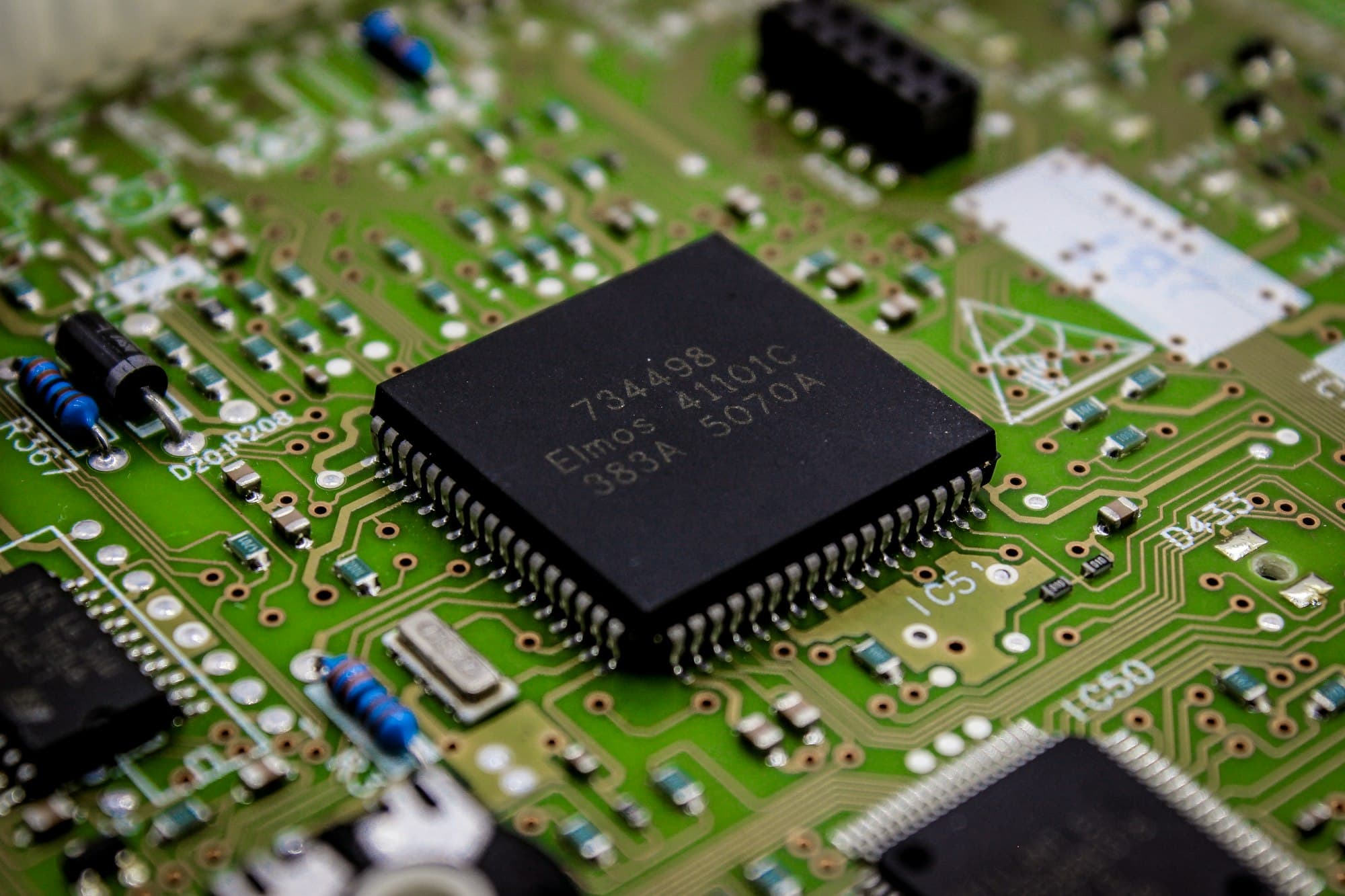
A close-up of a green circuit board with a black microchip at its center.
  1. 01

    Conferences as primary venues

  2. 02

    Double-blind anonymization

  3. 03

    Reproducibility and artifacts

  4. 04

    Dataset descriptions and documentation

  5. 05

    Terminology, notation, and AI-use disclosure

Typical manuscripts and outputs

Full conference papers
Peer-reviewed papers written to a venue’s template and page limit, often with appendices and an author-response phase during review.
Workshop and short papers
Shorter or earlier-stage work presented alongside a main conference, sometimes in non-archival form, which affects how an expanded version can be submitted later.
Journal articles
Longer articles in ACM and IEEE transactions and field journals, sometimes extending conference work and often the main output in information systems and applied areas.
Dataset, benchmark, and software papers
Contributions centered on a new dataset, evaluation benchmark, or tool, judged on documentation, accessibility, licensing, and what further research they make possible.
Preprints and technical reports
Versions posted to arXiv or institutional repositories to share results early; they are moderated but not peer reviewed, and venue policies determine how they interact with anonymous review.

Common writing and submission challenges

  • Page limits that squeeze the method

  • Accidental de-anonymization

  • Claims that outrun the experiments

  • Short author-response windows

  • Rushed resubmission to the next deadline

Choosing a journal in this field

More on this in how to choose a journal beyond its impact factor.

Support that often fits

  • Manuscript Editing

    Tightens prose to fit page limits while keeping technical terminology, notation, and claims consistent.

  • Journal Formatting

    Adapts a paper to a new venue’s template, page limit, reference style, and anonymization rules when moving between conferences or to a journal.

  • Reviewer Response & Resubmission

    Helps structure concise rebuttals within short author-response windows, and fuller response letters for journal revisions.

  • Research Communication

    Supports clear abstracts, posters, and plain-language summaries for work presented at conferences and shared as preprints.

Authoritative resources

Official guidance worth reading alongside your target journal’s instructions.

  1. [1]NeurIPS Paper Checklist Guidelines (external link) · Neural Information Processing Systems (NeurIPS)An example of the reproducibility, limitations, and responsible-research questions major AI venues ask authors to answer.
  2. [2]arXiv Submission Overview (external link) · arXivHow preprints are prepared, submitted, and moderated before announcement.
  3. [3]arXiv Licenses (external link) · arXivThe license options for preprints; the choice cannot be changed later, so it is worth checking against journal policies first.
  4. [4]IEEE Author Center: Conferences (external link) · IEEETemplates and preparation guidance for papers in IEEE conference proceedings.

From the research library

Follow the publishing journey

How to respond to reviewer comments point by point

A clear response letter answers every comment, shows exactly what changed and where, and handles disagreement with evidence. Here is a method that keeps the letter and manuscript in step.

Peer Review6 min read

Writing a clearer title and abstract

Editors, reviewers, and search tools often see only your title and abstract. Here is how to make both accurate, specific, and easy to find, without overselling the findings.

Research Communication6 min read

Questions from researchers in computer science and ai

Will posting my paper on arXiv affect double-blind review?
What should a reproducibility statement include?
Do I need to disclose using AI tools while writing my paper?
Is support available across different areas of computing?

Working on something specific?

Tell us the topic and the journal you have in mind. We confirm fit before proposing anything.

Ask about your manuscript

Discuss a manuscript in this field.

Tell us the topic, the study design, and where you hope to submit. We’ll confirm whether we can help well before proposing anything.