From first draft to the next editorial decision.
Academic publishing involves a series of decisions, and each stage presents different questions. Knowing where you are in the process makes it easier to identify what needs attention.
This guide walks through the eight stages most manuscripts pass through, with the questions to ask, a practical checklist for each, and the terms editors use along the way.

01Preparing the manuscript
Clarify the question, the methods, and the contribution before thinking about where it goes.

A manuscript is ready to place when its research question, methods, findings, and contribution can each be stated in a sentence, and the text says those things in the same way throughout. Most of the hard editorial work happens here, not at submission.
This is also when reporting requirements matter most. Many fields have reporting guidelines for particular study designs, and many journals expect statements on ethics, consent, funding, conflicts of interest, and data availability. Gathering that information early is easier than reconstructing it at upload.
Checklist
- Title, abstract, and conclusions describe the same findings with the same strength of claim.
- Terminology and abbreviations are consistent from the introduction to the discussion.
- Methods contain enough detail for the work to be appraised and, where relevant, repeated.
- Ethics approval, consent, funding, and conflict-of-interest details are collected and accurate.
- Co-authors agree on the author list and order, and have seen the current draft.
Questions to ask
- Can you state the contribution in one or two sentences a reader in your field would recognize?
- Does every section serve that contribution?
- Which reporting guideline, if any, applies to your study design?
Where support can help
02Selecting a journal
Match the work to a credible venue’s scope, readers, article types, and policies.
Journal choice works best when it starts from the manuscript rather than from a ranking. Read each candidate’s aims and scope, look at what it has published recently, and check that it accepts your article type at your length.
Then check what can be verified: indexing in the official database, the fees on the journal’s own site, its peer-review model, and policies on preprints and data. Indexing status can change, so record the date you checked. A journal advertising indexing is not proof of either indexing or quality.
Checklist
- Aims and scope read in full; two or three recent articles similar to yours identified.
- Indexing verified in the official database, with the date of the check noted.
- Fees, waivers, and licensing taken from the journal’s own pages.
- Peer-review model, preprint policy, and data policy understood.
- Warning signs checked: unsolicited invitations, unclear fees, unrealistic speed promises.
Questions to ask
- Who needs to read this, and where do they read?
- Does the journal publish this article type, at this length, in this field?
- What would it cost, and does that meet any funder or institutional requirement?
Where support can help
03Preparing a submission
Meet the journal’s author guidelines, declarations, and file requirements in full.
Author guidelines are a specification. Structure, word limits, reference style, figure formats, supplementary material, and required statements all need to match what the journal asks for, and the submission system will request information that is not in the manuscript at all.
A cover letter usually introduces the work and explains why it suits the journal; check whether the journal specifies what it must contain. Some journals ask you to suggest or exclude reviewers, and many request ORCID iDs for every author.
Checklist
- Manuscript structure, headings, and word count match the article type.
- References follow the journal’s style, and every citation appears in the list (and vice versa).
- Figures meet resolution and format requirements; permissions are in place for reused material.
- Required declarations are complete and consistent with the manuscript.
- Cover letter, author details, and ORCID iDs are ready for the submission system.
Questions to ask
- Have you read the full guidelines for your article type, not only the summary page?
- Which declarations does the journal require, and where do they go?
- Is every figure, table, and supplementary file named and referenced as the journal asks?
Where support can help
04Understanding peer review
Know what happens after submission, and how to read what comes back.
After submission, an editor usually assesses the manuscript first. Some are declined at this stage (a desk rejection), often for scope or fit; others are sent to reviewers. Review models differ: single-anonymized, double-anonymized, and open review are all in use, and journals describe theirs in their policies.
How long review takes varies widely by journal and field, and is not something any author or service can control. When the decision arrives, read the whole letter and every report before reacting; the editor’s summary often signals which comments matter most.
Checklist
- Decision letter and all reports read in full, at least twice, with a day in between.
- Editor’s priorities identified and noted.
- Comments that conflict, overlap, or are unclear marked for discussion with co-authors.
- Resubmission deadline noted; extension requested early if it will be needed.
Questions to ask
- What review model does the journal use?
- What did the editor emphasize in the decision letter?
- Which comments are requests, and which are suggestions?
Where support can help
05Revising the manuscript
Plan the revision before writing it, and keep the manuscript and the record aligned.
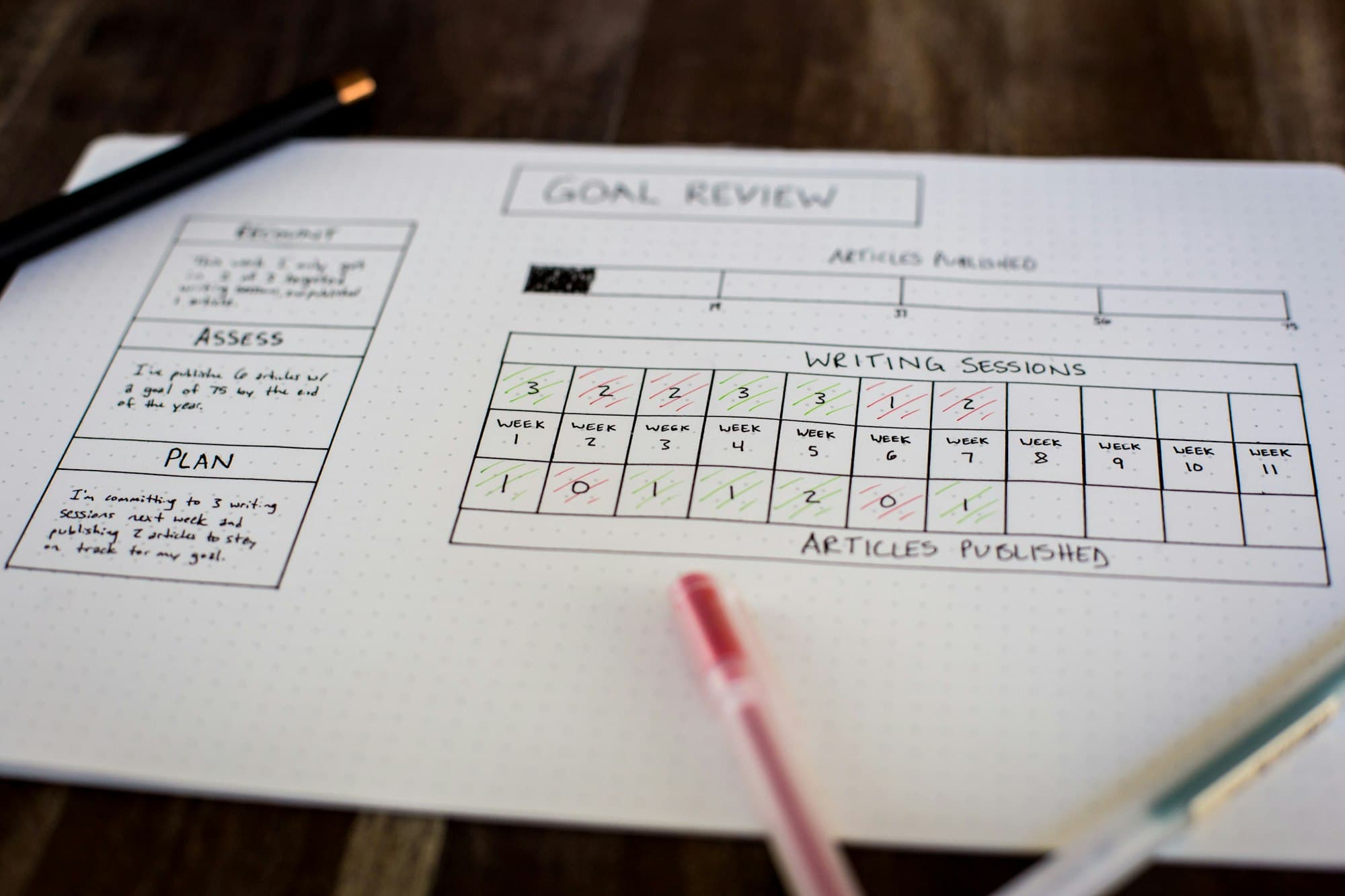
A good revision starts with a plan: every comment numbered, sorted by the kind of work it needs, and assigned. Some comments call for new analysis or data; many call for clarification, reorganization, or a clearer statement of limits.
Track changes as you go. Journals commonly ask for a marked-up version alongside a clean one, and the response letter will need to point to where each change was made.
Checklist
- Every comment numbered and categorized: major, minor, editorial, unclear, conflicting.
- New analyses, if any, completed and checked before text is revised around them.
- Changes tracked; locations (page, line, section) recorded as you go.
- Abstract, conclusions, and figures updated to match revised results.
Questions to ask
- Which comments need new work, and which need clearer writing?
- Do any requested changes conflict with each other, or with the study’s design?
- Who on the author team is responsible for each change?
Where support can help
06Responding to reviewers
Answer every point directly, with evidence, and describe only changes that exist.
The response letter is a record. For each comment, it says what the authors did and where, or explains with evidence why a suggestion was not adopted. Courtesy helps; defensiveness and vagueness do not.
Disagreeing with a reviewer is legitimate when the reasoning is clear and respectful. What is never acceptable is claiming a change that was not made, or citing evidence that does not exist.
Checklist
- Each comment quoted or summarized, followed by a direct response.
- Each stated change located by page, line, or section in the revised manuscript.
- Disagreements explained with reasoning or evidence, in a respectful tone.
- Letter checked against the manuscript by someone other than the person who wrote it.
Questions to ask
- Does every comment have a response?
- Does every response that mentions a change point to where it is?
- Where you disagree, is the reasoning and evidence set out plainly?
Where support can help
Further reading
07Resubmitting
Confirm the revised files, declarations, and letter are complete and consistent.

Resubmission usually involves the revised manuscript (clean and marked-up), the response letter, updated figures or supplementary files, and any declarations that changed. Follow the journal’s resubmission instructions exactly; they often differ from first-submission instructions.
If you are moving to a different journal instead, treat it as a new submission: reformat for the new journal, and consider whether the previous reviewers’ comments should improve the manuscript before it goes out again.
Checklist
- Clean and marked-up manuscripts both uploaded, and identical apart from the markup.
- Response letter complete and consistent with both versions.
- Figures, tables, and supplementary files updated and renumbered where needed.
- Declarations and author details reconfirmed by all authors.
Questions to ask
- Do the clean and marked-up versions match each other exactly?
- Have any author, funding, or declaration details changed?
- If submitting elsewhere, has the manuscript been reformatted and strengthened?
Where support can help
08Understanding acceptance, rejection, and what follows
Read each decision for what it says, and plan the next step from there.
A revised manuscript can be accepted, returned for further revision, or rejected. Acceptance is followed by production: copyediting queries, proofs to check carefully, licensing or copyright forms, and in some models an article processing charge.
Rejection after review is common and is not a verdict on the research’s worth. The reports are often the most useful feedback the manuscript will receive. Decide whether the issues were about fit or substance, revise accordingly, and choose the next journal deliberately.
Checklist
- Proofs checked line by line, including tables, figures, and author details.
- Licensing, copyright, and any fees understood before signing or paying.
- After a rejection, reviewer comments used to strengthen the manuscript before resubmission elsewhere.
- Next journal chosen for fit, not only for speed.
Questions to ask
- If accepted: what do the proofs and licensing forms require of you, and by when?
- If rejected: was the issue fit, framing, or substance?
- Does the journal have an appeals policy, and does your situation genuinely warrant one?
Where support can help
The terms editors use
- Author guidelines
- A journal’s instructions for authors: scope, article types, formatting, references, declarations, and submission steps.
- Desk rejection
- A decision made by the editor before peer review, often because the manuscript is outside the journal’s scope or does not meet basic requirements.
- Peer review
- Evaluation of a manuscript by independent experts, whose reports inform the editor’s decision.
- Single- and double-anonymized review
- In single-anonymized review, reviewers know the authors’ identities but not vice versa; in double-anonymized review, neither side knows the other’s.
- Minor revision
- The editor will likely accept the manuscript once relatively small changes are made. It is still not an acceptance.
- Major revision
- Substantial changes are required, and the revised manuscript is usually reviewed again.
- Revise and resubmit
- The manuscript is not accepted in its current form, but the editor invites a substantially revised version. Terminology varies between journals.
- Reject and resubmit
- Used by some journals when they reject the current manuscript but would consider a new submission after major changes.
- Response letter
- The authors’ point-by-point reply to the editor and reviewers, explaining each change or the reason a suggestion was not adopted.
- Response matrix
- A table form of the response letter linking each comment to the response, the change made, and its location.
- Cover letter
- A short letter to the editor accompanying a submission, introducing the work and its fit for the journal.
- Reporting guideline
- A checklist of what to report for a particular study design, such as CONSORT for randomized trials or PRISMA for systematic reviews.
- Article processing charge (APC)
- A fee some journals charge, usually on acceptance, to publish an article open access.
- Indexing
- Inclusion of a journal in a bibliographic database such as Scopus or Web of Science. Status can change and should be verified at the source.
- Preprint
- A version of a manuscript shared publicly before peer review. Journals’ policies on preprints differ.
- DOI
- Digital Object Identifier: a persistent identifier for a published item, registered through agencies such as Crossref.
- ORCID iD
- A persistent identifier for researchers, which many journals ask authors to provide at submission.
- Proofs
- The typeset version of an accepted article, sent to authors to check for errors before publication.
- Version of record
- The final, published version of an article as it appears in the journal.